Bringing History to Life: Creating Interactive Portrait Exhibits for Flagler College’s Ponce de Leon Hotel
Some projects live at the intersection of storytelling, history, and technology. A recent collaboration with Flagler College and museum design firm Quatrefoil Associates was exactly that — a project centered on creating a series of interactive, living historical portraits installed inside the former Ponce de Leon Hotel, now the centerpiece of Flagler College and a building listed on the National Register of Historic Places.
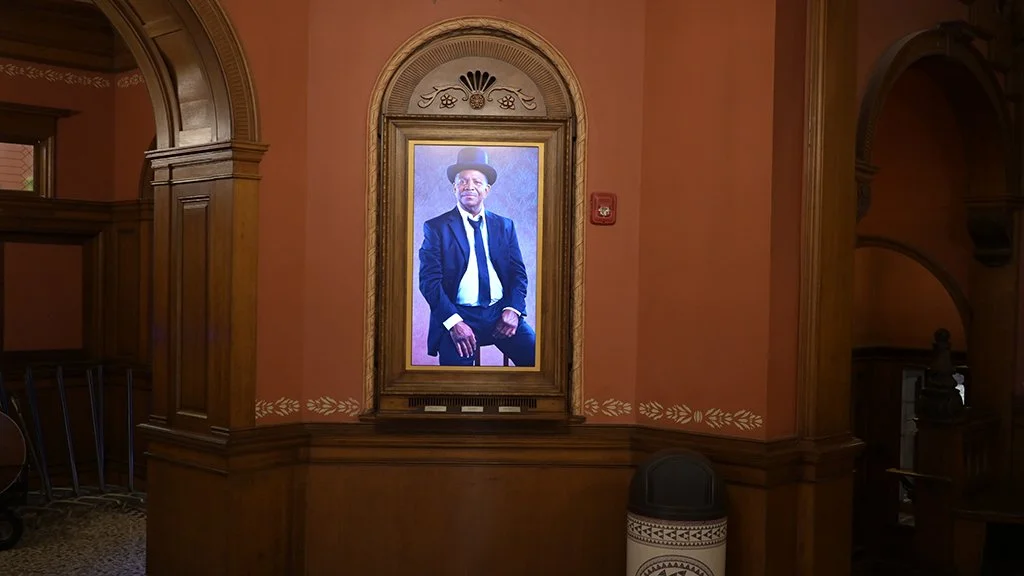
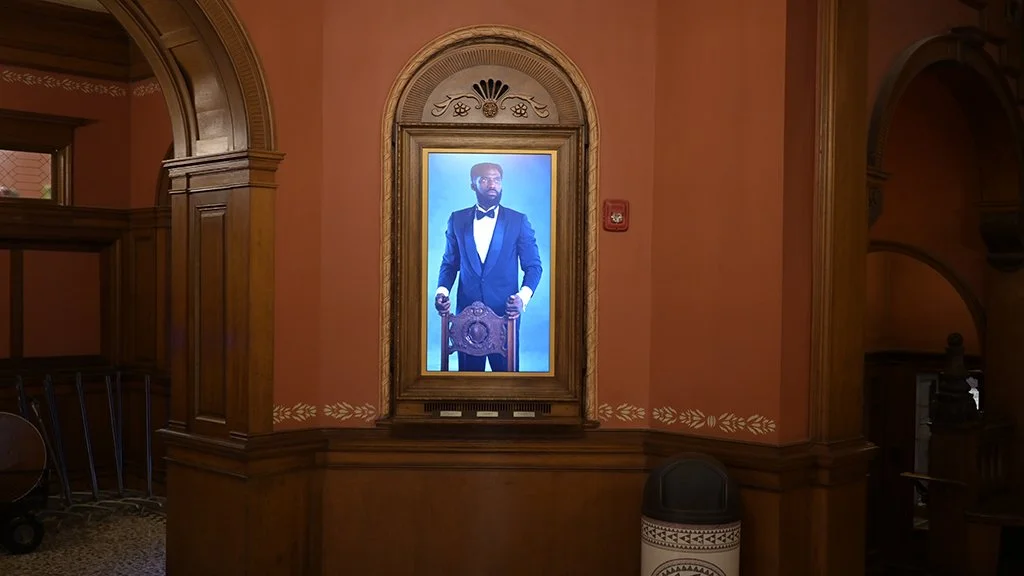
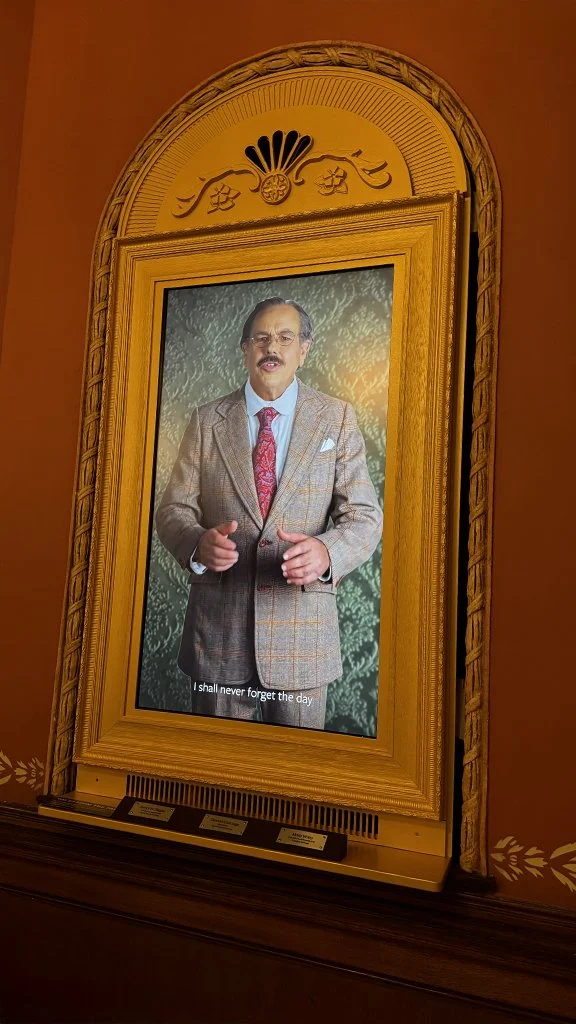
The exhibits feature historically accurate portrayals of individuals connected to the history of the hotel and the early years of Flagler College. Installed near the rotunda staircases, each portrait is designed to appear as a traditional framed painting or photograph. With the push of a button, the portrait comes to life, delivering a short historical monologue before seamlessly transitioning back into a still “portrait” pose.
Performance Meets Precision Production
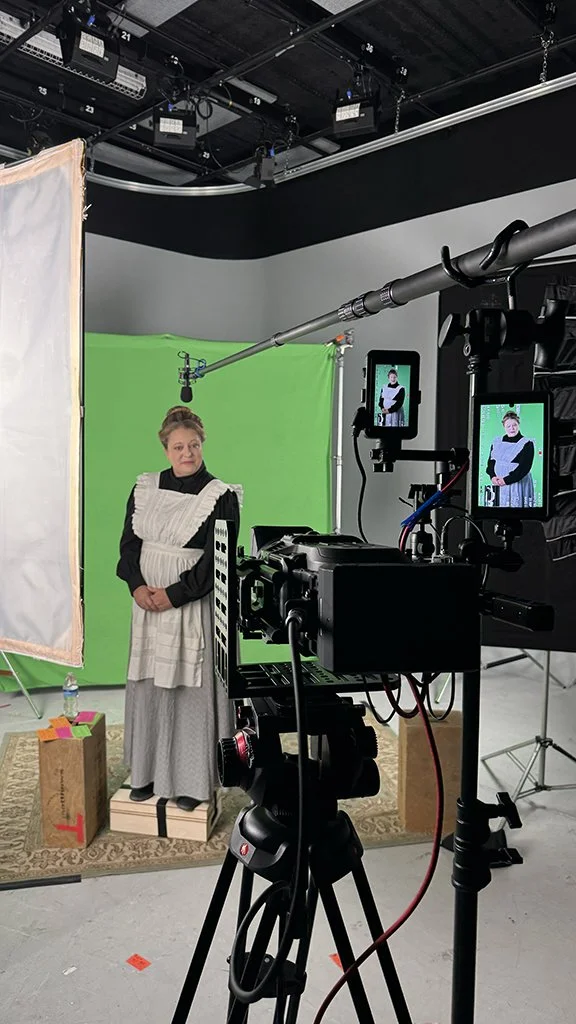
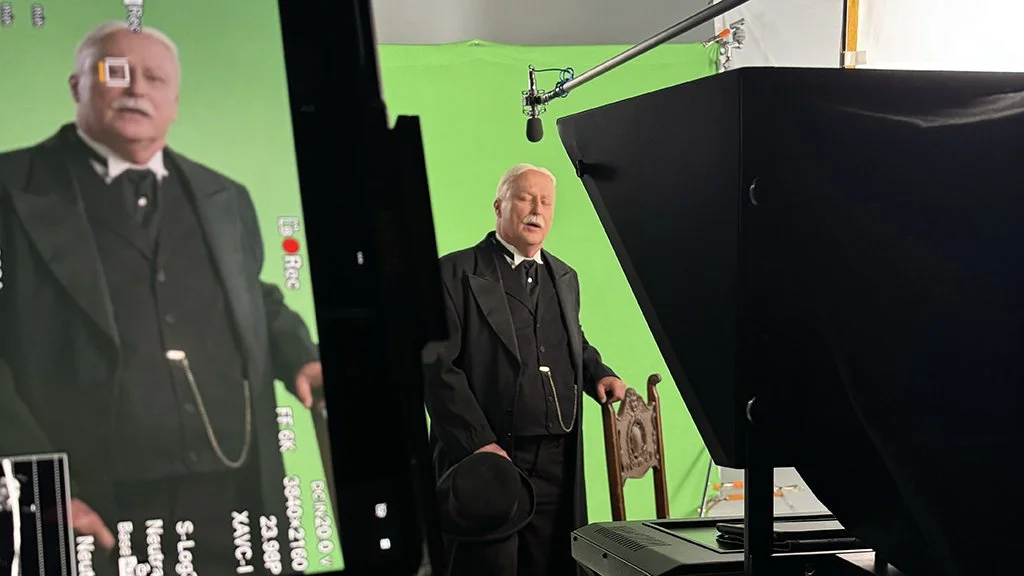
Each portrait required actors to perform nearly three-minute single-take scripts — no cuts — using historically accurate 19th-century language. This created a unique performance challenge, especially with complex period dialogue.
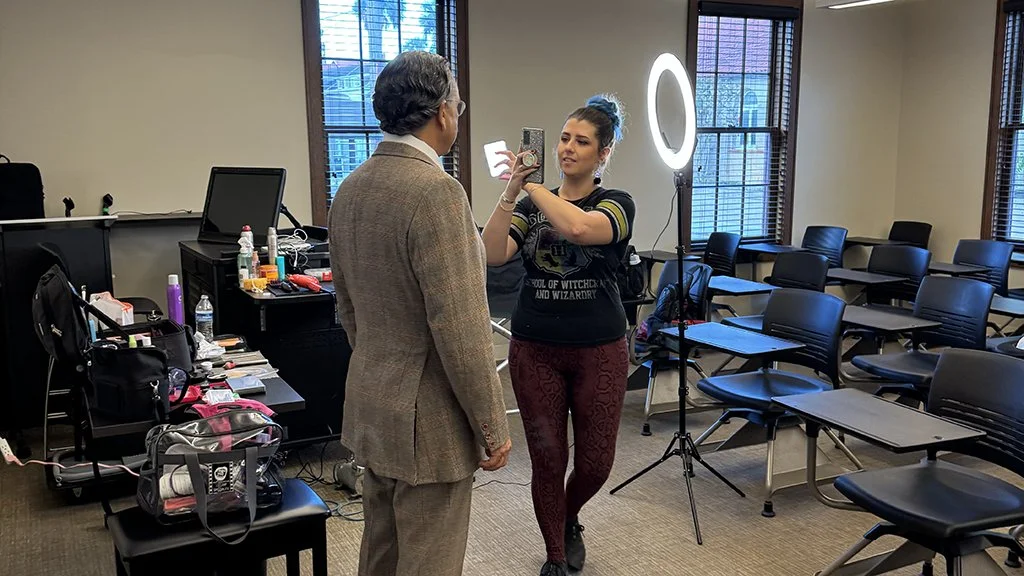
We worked closely with the client on set to refine scripts in real time and approve performances before moving to the next subject. Local talent helped bring these historical figures to life, supported by period-accurate wardrobe, props, and professional hair and makeup to ensure authenticity.
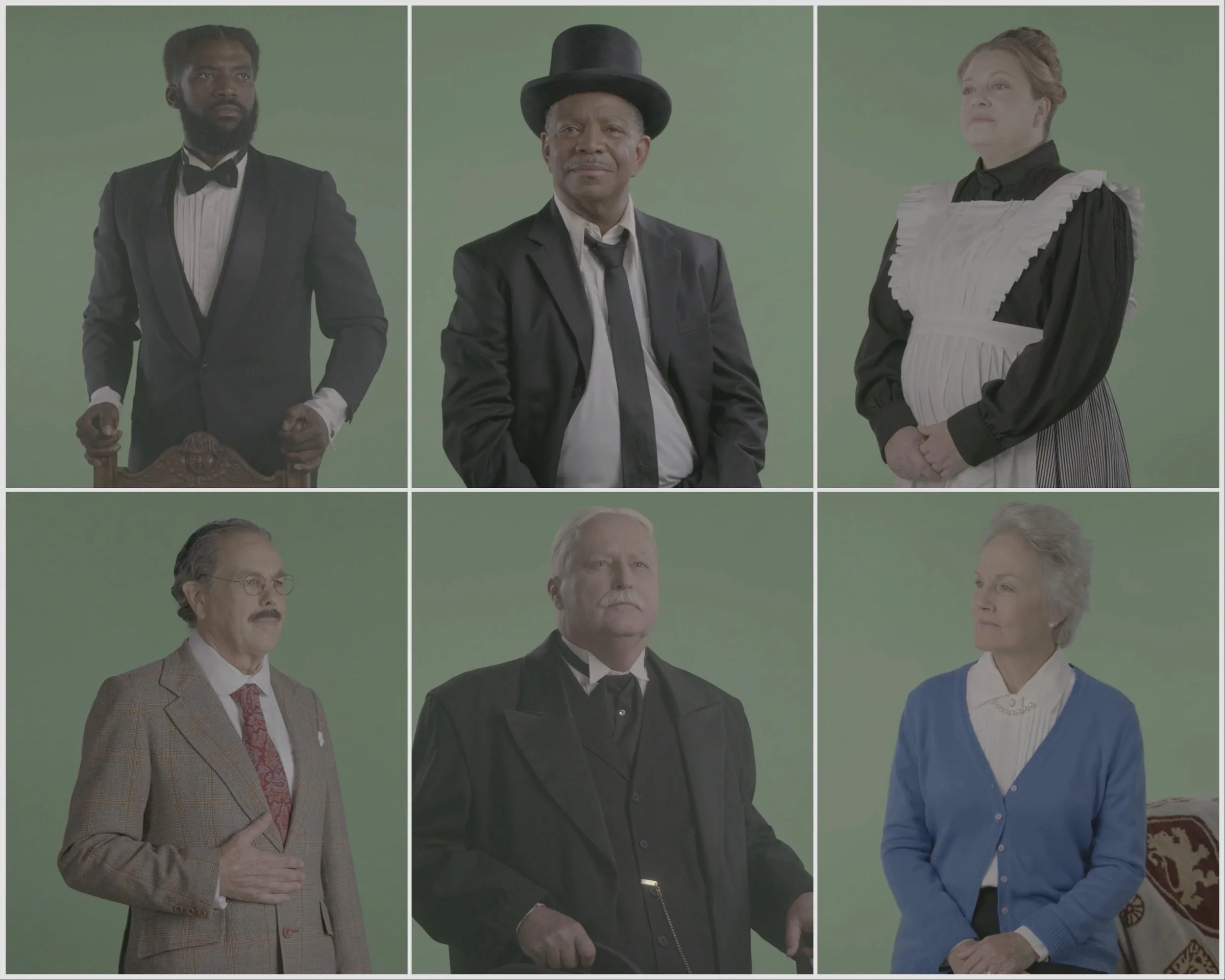
Historical figures portrayed included:
Henry Flagler — Ponce de Leon Hotel Founder and Business Leader
Thomas Hastings — Ponce de Leon Hotel Architect
Molly Wiley — Founding Member of Flagler College and relative of Henry Flagler
Annie McKay — Ponce de Leon Hotel Housekeeper
Major Arguet Jr. — Carriage Driver serving the Ponce de Leon Hotel
Frank Thompson — Waiter at the Ponce de Leon Hotel
Designing for Permanent Installation: Resolution and Framing
Because these portraits are designed to live permanently as part of a museum-style installation, technical precision was critical.
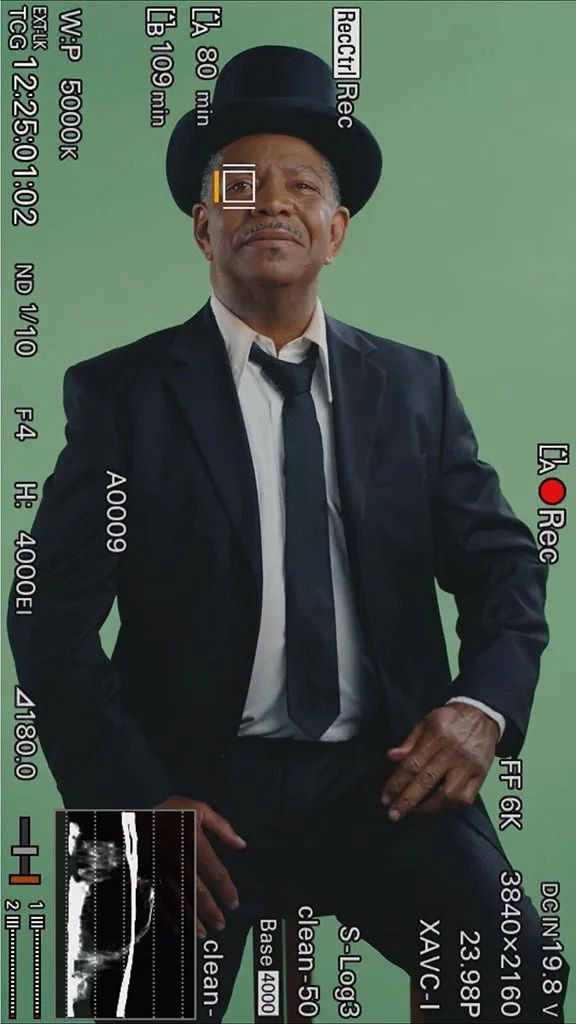
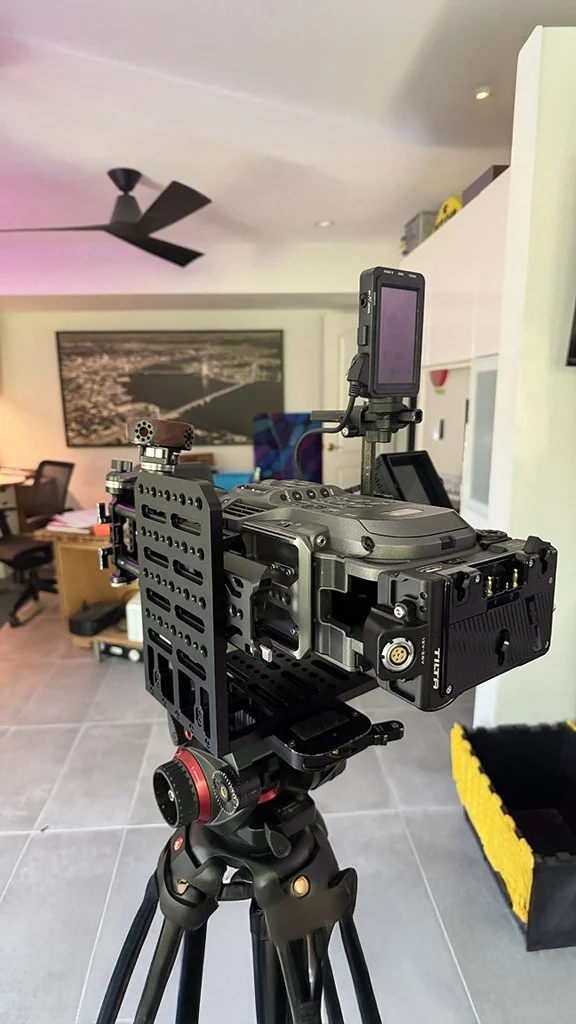
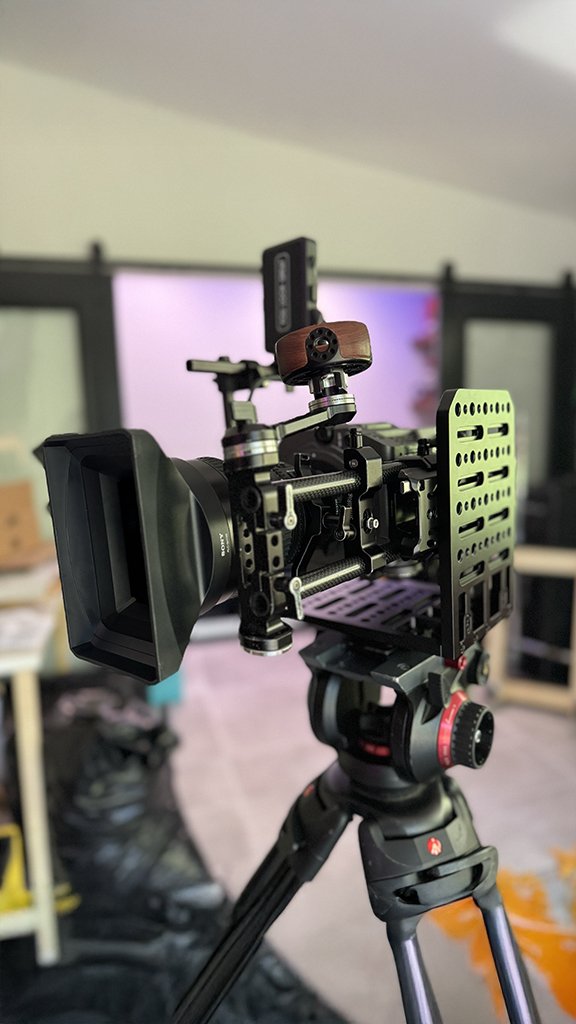
Since the displays are vertical and intended to maximize 4K resolution, we made the decision to rotate the camera vertically during capture. This introduced workflow and rigging challenges, but allowed us to capture maximum usable resolution for the final displays.
Because these portraits are meant to feel like living paintings, framing had to be extremely precise. Every composition was built to minimize cropping in post and preserve the integrity of the final image as it appears in the custom frame installations.
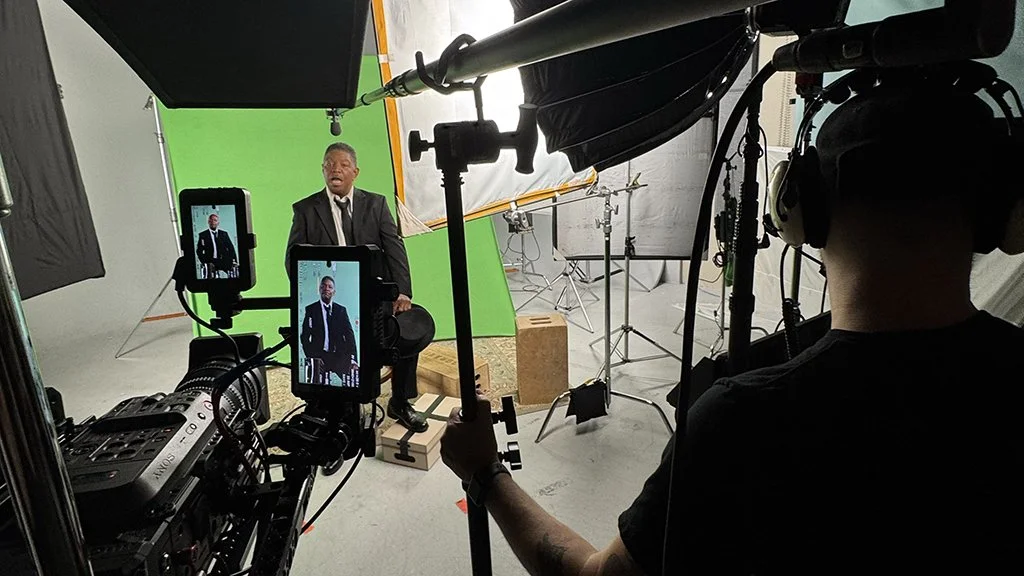
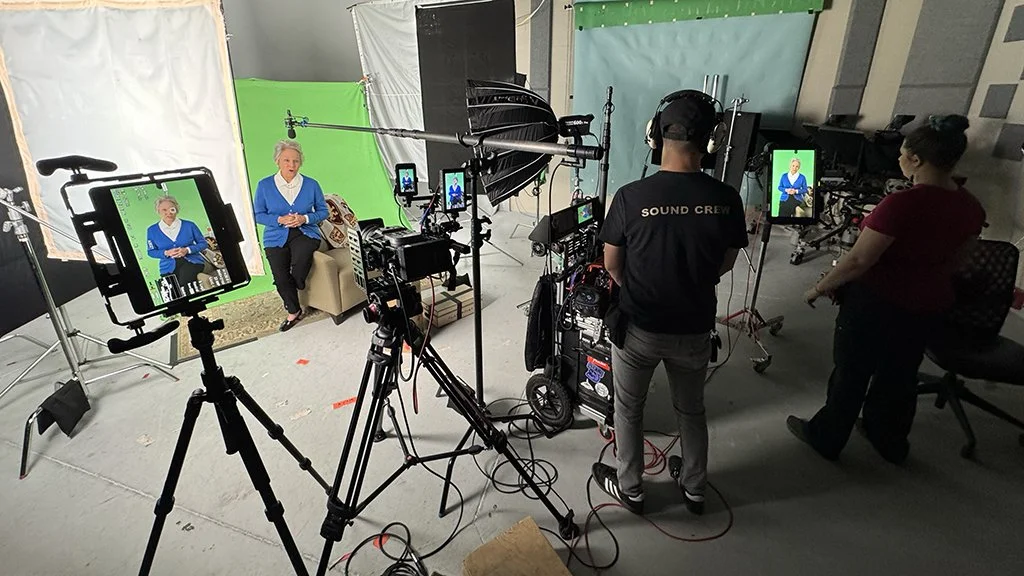
All portraits were filmed on green screen, with historically accurate environments composited in post.
Efficient Production Through Controlled Studio Workflow
Flagler College’s TV studio became the perfect controlled environment for production. Shooting in one location allowed us to:
Maintain visual continuity across all portraits
Keep lighting and set builds consistent
Maximize efficiency across a two-day production schedule
Reduce reset time between actors
Each setup remained visually consistent, with subtle lighting adjustments to create variety while maintaining a unified exhibit look across all portraits.
Collaboration Across Creative and Technical Teams
Projects like this rely heavily on collaboration between creative direction, historical research, performance, and technical execution. On smaller, highly focused crews, that collaboration becomes even more important. Unlike larger productions where every role has a dedicated department, smaller crews often require team members to step outside their primary roles to support the overall success of the production.
Because our team works together frequently, there is a high level of trust and comfort in offering ideas, troubleshooting challenges, and helping refine performances or technical execution in real time.
For example, while Thomas was focused on capturing clean, high-quality audio, he was also closely listening to performance delivery. That allowed him to flag moments where wording, pacing, or inflection felt slightly off, and he was able to offer helpful notes to talent between takes to help improve overall performance.
Hillary was brought onto the project as the makeup artist, but her contributions extended well beyond hair and makeup. She offered valuable input on wardrobe details, small prop adjustments, and overall visual cohesion on set. Having another creative eye focused on period accuracy and visual storytelling helped elevate the authenticity of each portrait and supported the historical integrity of the final pieces.
Since we didn’t have a dedicated gaffer or grip on this production, Jon and I handled lighting adjustments, rigging, and technical setup alongside our primary roles in camera operation and directing. This kind of multi-role workflow only works because of strong communication, shared experience, and a collective focus on delivering the best possible final result.
Crew
Michael LeGrand — DP / Director
Jon Noeth — AC
Thomas Amason — Audio
Hillary Warren — Makeup
Flagler College — Client
Quatrefoil Associates — Agency
Where Documentary Storytelling Meets Branded Content Production
Creating immersive storytelling experiences like this requires far more than cameras and lighting. It takes trust between clients, creative teams, and talent, along with a shared commitment to honoring both the story and the audience. The final experience may feel simple and seamless, but it’s built on careful planning, technical problem solving, performance, and collaboration across every department.
Being trusted with work that helps preserve history and connect people to it in a meaningful way is something I never take lightly. I’m always grateful to help bring these kinds of stories to life.